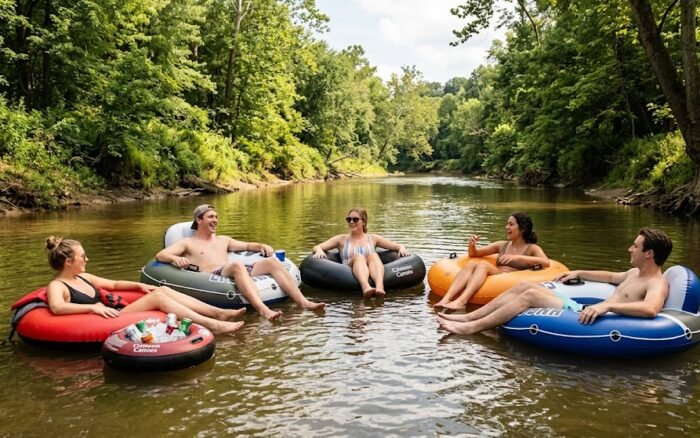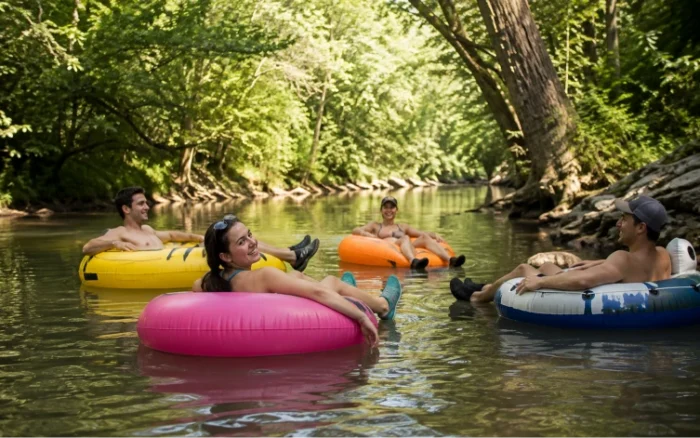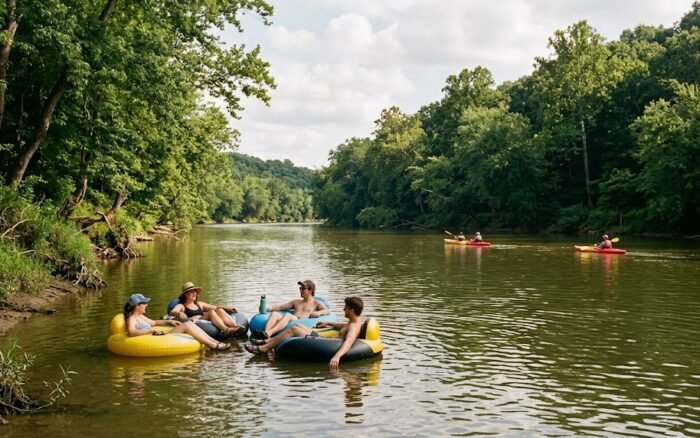
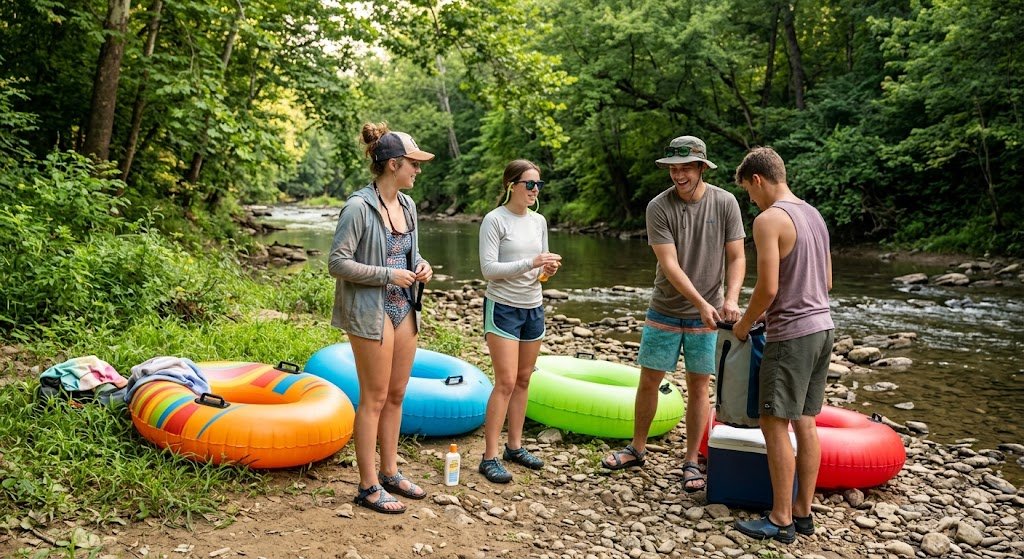
For river tubing, wear a swimsuit or other quick-drying base, lightweight clothes you are comfortable getting completely wet, secure water shoes, sun protection and sunglasses you can keep attached to you.
The main rule is simple: dress for several hours of water, sun and wet surfaces—not for how you plan to look before you get in the tube.
What Should You Wear River Tubing?
A simple warm-weather tubing outfit looks like this:
- Swimsuit or quick-drying base layer
- Lightweight quick-drying shirt or sun shirt
- Quick-drying shorts if desired
- Secure water shoes or sport sandals
- Hat that can get wet
- Sunglasses with a retainer strap
- Properly fitted life jacket when required or provided
You do not need specialized river clothing for a relaxed recreational float, but every piece should make sense when wet.
Best Swimsuits for Tubing
Choose a swimsuit that stays in place when you sit, stand, climb into a tube and move through the water.
That matters more than the exact style.
For a several-hour trip, consider comfort when seated for long stretches. Straps, buckles or decorative pieces that feel fine standing on shore may become annoying against the tube.
If you prefer more coverage, combine swimwear with quick-drying shorts or a lightweight shirt rather than wearing ordinary heavy clothing over it.
Should You Wear a Shirt While Tubing?
You do not have to, but a lightweight shirt can be useful for comfort and sun coverage.
A quick-drying athletic shirt, rash-guard-style top or sun shirt handles repeated splashing much better than a heavy cotton T-shirt.
FDA recommends using protective clothing, hats and sunglasses along with sunscreen because no sunscreen completely blocks ultraviolet radiation.
If you choose a long-sleeve sun shirt, make sure it is breathable and comfortable when wet.
Best Shoes for River Tubing
Your footwear should stay attached to your feet and be designed to tolerate water.
Good options include:
- Water shoes
- Secure closed-toe water footwear
- Sport sandals with heel straps
- Older lightweight athletic shoes that drain well, when appropriate
National Park Service river guidance recommends sturdy or closed-toe footwear for moving-water recreation because riverbeds and access areas can include slippery rocks and objects that are difficult to see.
No footwear eliminates the risks of walking in natural water. The practical goal is secure footing and basic protection rather than a safety guarantee.
Can You Wear Flip-Flops Tubing?
You can physically wear them, but loose flip-flops are usually one of the least practical options.
They can slide off when you step into deeper water, get caught in mud, float away or leave your foot exposed when walking over a rough creek edge.
If you want a sandal, a design with a heel or ankle strap is generally easier to keep attached.
Keep a pair of dry flip-flops in your post-float clothes if you enjoy wearing them afterward.
What Kind of Shorts Work Best?
Choose shorts that dry quickly and do not become excessively heavy when soaked.
Swim trunks, board shorts and lightweight synthetic athletic shorts are common choices.
Avoid loading the pockets with your phone, wallet and keys. Wet pockets are poor dry storage, and loose valuables can disappear when you enter or exit the water.
If the shorts have secure zippered pockets, they can help with small water-tolerant items, but waterproof storage is still better for electronics.
Should You Wear Cotton?
A little cotton on a hot casual float is not automatically a problem, but heavy cotton is usually inconvenient once soaked.
It absorbs water, becomes heavier and takes longer to dry than clothing designed for water or athletic use.
For a long float, quick-drying fabrics are generally more comfortable.
This becomes more important when the weather is cooler because remaining in wet clothing can make you cold even after the float ends.
What to Wear on Cooler Days
Do not dress only for the afternoon air temperature. Check the weather and water conditions for the actual day of your trip.
National Park Service river guidance notes that water can remain cold even when the air feels warm, and recommends appropriate clothing plus dry clothes for afterward.
For a cooler recreational float, consider:
- Quick-drying long-sleeve layer
- Lightweight synthetic top
- Quick-drying shorts or pants appropriate for the conditions
- Secure water shoes
- A dry change of clothes immediately afterward
If conditions are genuinely cold enough to require specialized thermal-water protection, verify what equipment is appropriate for that waterway and whether the outing should run at all rather than improvising.
What to Wear for Sun Protection
You will often have more sun exposure on a tube than you expect because you are outside for several hours and may have limited shade.
A practical setup can include:
- Lightweight sun shirt
- Hat
- Sunglasses
- Sunscreen used as directed
Sunglasses should have a retainer strap. A hat should either fit securely or be one you do not mind getting wet.
For sunscreen, FDA advises reading the label carefully. Water-resistant products indicate whether they maintain labeled protection for 40 or 80 minutes while swimming or sweating and still require reapplication.
What NOT to Wear Tubing
Expensive Jewelry
Rings, bracelets, watches and necklaces are easy to lose in moving water and difficult to recover.
Clothes You Need to Keep Dry
Assume your entire tubing outfit will get wet.
If that would ruin the clothing or make the rest of your day difficult, wear something else.
Heavy Denim
Jeans absorb a large amount of water and are uncomfortable to sit in once soaked.
Loose Footwear
Anything that can easily slide off your feet is also capable of disappearing downstream.
Overfilled Pockets
Your shorts are not a dry bag. Keep valuables protected separately.
Anything With Sharp or Bulky Hardware
Large metal accessories, sharp decorations and bulky belt hardware can be uncomfortable on an inflatable tube and add no real benefit.
What to Wear After the Float
The best post-float outfit is dry.
Keep a towel and change of clothes somewhere protected from the water. Depending on the day, that might include:
- Dry shirt
- Dry shorts or pants
- Underwear
- Dry socks
- Comfortable dry shoes
- Light sweatshirt or layer for a cooler evening
Changing before a longer ride home is far more comfortable than remaining in wet swimwear.
For everything else you should pack, read What to Bring on a River Tubing Trip.
What to Wear for a Crimson Canoes Trip
Crimson Canoes’ Salt Creek trip involves approximately three to four hours physically floating, so dress for a real afternoon on the water rather than a quick splash.
A practical outfit is:
- Swimsuit or quick-drying clothing
- Lightweight sun shirt if desired
- Secure water shoes
- Hat
- Sunglasses with a retainer
Your life jacket is provided by Crimson Canoes, along with the tube and transportation from downtown Bloomington to Salt Creek and back.
You do not need a helmet, paddling gear or whitewater clothing. The experience is designed as a relaxed lazy-river-style float rather than whitewater rafting.