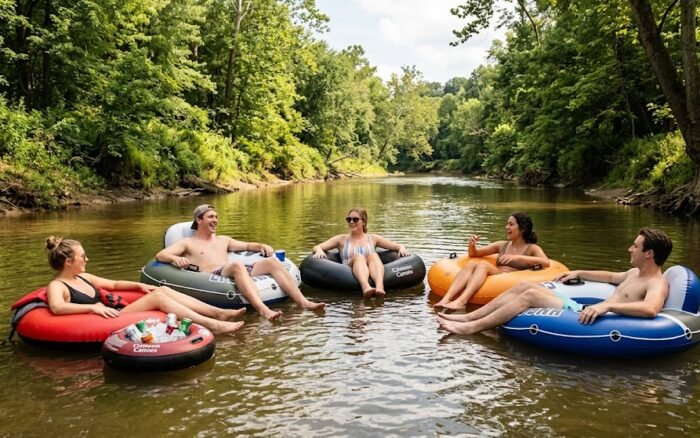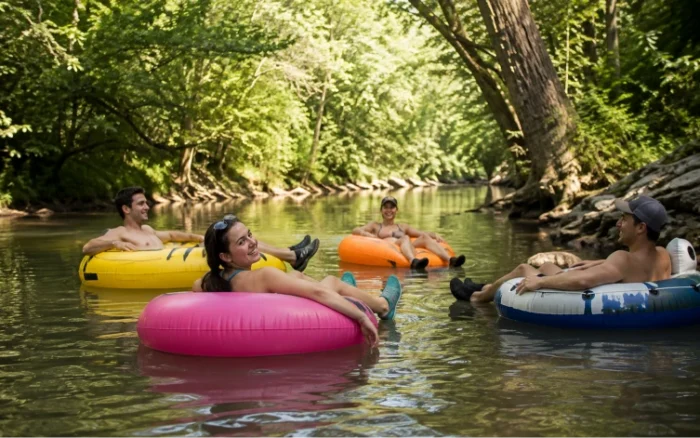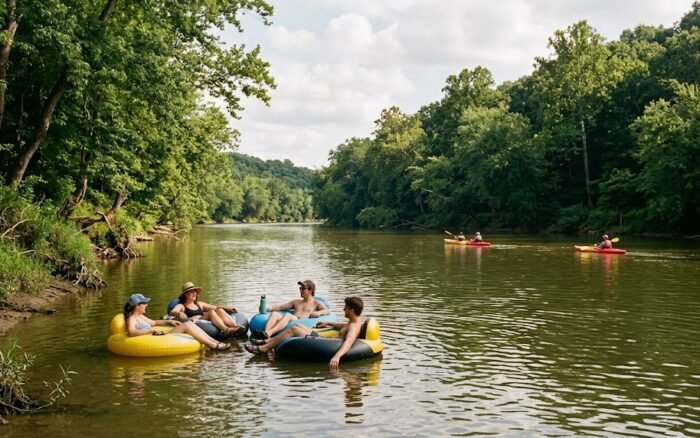
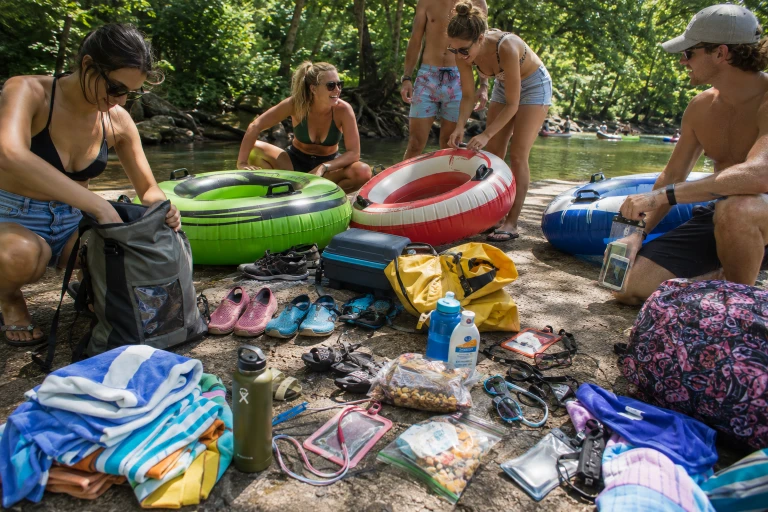
For a river tubing trip, bring drinking water, sun protection, secure water shoes, a waterproof way to protect your phone, a few snacks and dry clothes for afterward. Beyond that, less is usually better.
You are going to spend several hours around water, and anything you take becomes something you have to keep dry, keep attached to you or bring back out at the end.
River Tubing Packing List
1. Drinking Water
Bring enough drinking water for the time you expect to spend outside.
Tubing may not feel strenuous because the river is doing most of the moving, but you are still spending hours in warm weather and direct or reflected sunlight.
Use a bottle or container that can be secured rather than something likely to float away if the tube tips or you drop it.
If your trip is with a commercial outfitter, check its container rules before arriving.
2. Sunscreen
Water does not cancel sun exposure. In fact, reflected light can make a long water day feel deceptively intense.
Choose a broad-spectrum sunscreen appropriate for your needs and follow the product label for application and reapplication.
FDA specifically notes that sunscreen is not truly waterproof. Products labeled water resistant are tested for either 40 or 80 minutes of water resistance and still include reapplication directions.
Do not apply once in the morning and assume you are covered for a four-hour float.
3. Secure Water Shoes
Your shoes should be able to get completely wet and stay on your feet.
River and creek bottoms can include rocks, sticks, uneven surfaces and objects that are difficult to see through the water. National Park Service river guidance commonly recommends sturdy or closed-toe footwear for moving-water recreation.
Water shoes, secure sport sandals designed for water or similar footwear are generally more practical than walking barefoot.
The goal is not to find a shoe that makes river walking risk-free—no shoe can do that. You simply want something secure and appropriate for wet surfaces.
4. Simple Food and Snacks
For a multi-hour float, compact food usually works better than trying to recreate a full picnic in your tube.
Choose foods that:
- Can tolerate warm outdoor conditions
- Fit in a sealed container
- Do not create lots of loose wrappers
- Are easy to eat without balancing plates or utensils
Crimson Canoes allows customers to bring food and drinks, but anything taken onto the creek should come back out with you.
5. Drinks in Secure Containers
Bring whatever non-alcoholic drinks make sense for your group, but keep hydration simple and make sure containers are secured.
If alcohol is part of a Crimson Canoes outing, anyone drinking must be of legal drinking age and follow all applicable laws.
A tubing trip is not a good reason to encourage heavy drinking. Moving water and impaired judgment are a poor combination.
6. A Trash Bag or Secure Trash Container
One of the easiest pieces of gear to forget is something to hold empty wrappers, cans and other trash.
Anything brought onto the creek should come back out.
A small secure bag or container keeps loose items from floating away and makes cleanup at the end almost automatic.
You do not need a complicated leave-no-trace system. Just give trash a specific place to go before you launch.
7. Waterproof Phone Protection
If your phone comes onto the water, assume it will eventually be splashed.
A waterproof phone pouch with a secure attachment point is often more useful than simply putting the phone in a pocket.
A dry bag is another option when you are protecting several items together.
Remember that waterproof protection solves only half the problem. A perfectly dry phone is not useful if it sinks or floats away.
8. Sunglasses With a Retainer
Sunglasses are useful for several hours outdoors, but ordinary loose sunglasses are easy to lose when getting in or out of a tube.
Add a simple retainer strap.
If your sunglasses are expensive or sentimental, consider bringing a pair you would be less upset about losing.
9. A Hat
A lightweight hat adds shade for your face and scalp and can make a long sunny float more comfortable.
Choose one you can secure or would not mind getting wet.
FDA recommends combining sunscreen with other sun-protection measures such as protective clothing, sunglasses, shade and hats rather than relying on sunscreen alone.
10. Towel and Dry Clothes for Later
You probably do not need your towel sitting in the tube with you.
Leave it somewhere dry for the end of the trip when the outing’s logistics allow.
A complete change of dry clothes makes the ride home much more comfortable, particularly if the temperature drops later in the day.
National Park Service river guidance also recommends carrying or having access to dry clothing because water can remain cold even when the air feels warm.
11. Bug Repellent When Conditions Call for It
Creeks and wooded areas can mean insects, particularly around launch and pickup locations or later in the day.
You may not need repellent during every float, but it is a reasonable item to keep with your dry gear.
12. Any Medication or Personal Item You Truly Need
If you must carry an essential personal item, protect it appropriately from water and keep it secured.
Everything nonessential is a candidate to stay behind.
What Crimson Canoes Provides
If you are floating with Crimson Canoes, several bulky items are already handled.
The experience includes:
- Inflatable tube
- Life jacket
- Transportation to Salt Creek
- Transportation back to downtown Bloomington
Tube styles include lounging tubes and classic inner tubes.
Optional rentals include a cooler tube and JBL speaker.
That means you do not need to buy a tube, inflate it, fit it into your vehicle or coordinate a second car at the downstream pickup point.
See how the Salt Creek float works.
What NOT to Bring Tubing
Unnecessary Valuables
Leave expensive watches, jewelry and anything irreplaceable somewhere secure.
A river is a difficult place to recover a small item once it disappears.
Things That Cannot Get Wet
If water would ruin it and you do not truly need it, leave it behind.
Loose Trash
Do not begin the trip with food and drinks spread loosely around the tubes. Give every item a secure place before launching.
Glass Containers
Even where a particular location does not have a verified glass prohibition, glass is a poor choice around a water recreation area because broken pieces create a problem for everyone using the shoreline or creek.
Use a more practical container and follow your outfitter’s specific rules.
Loose Flip-Flops
They are easy to lose and provide limited security when you need to step on uneven wet ground.
For more detail on footwear and clothing, read What to Wear on a River Tubing Trip.
Bulky Electronics
A large speaker, camera or other device quickly becomes another thing you are trying to protect instead of enjoying the float.
If your outfitter offers suitable rental equipment, that may be easier than carrying your own.
How to Keep Your Things Dry
Use Layers of Protection for Important Items
A phone can go into a waterproof pouch. Smaller critical items can go inside a sealed container within a dry bag.
Keep Dry Gear Separate From Creek Gear
Your towel and full change of clothes are much more useful at the end if they never came onto the water.
Secure Everything
Dry bags, pouches and coolers should not simply sit loose. Figure out how each item will stay with your tube before getting into moving water.
What to Pack for a 3–4 Hour Float
For a typical three-to-four-hour recreational float, you do not need to pack for an expedition.
A reasonable setup is:
- Drinking water
- A few snacks
- Sunscreen
- Water shoes worn on your feet
- Hat and secured sunglasses
- Waterproof phone pouch
- Small trash bag or container
- Optional cooler depending on the trip
- Towel and dry clothes waiting for afterward
That covers the basics without filling your tube with gear.
Printable-Style Quick Checklist
- Drinking water
- Sunscreen
- Secure water shoes
- Snacks
- Drinks
- Trash bag/container
- Waterproof phone pouch
- Sunglasses with retainer
- Hat
- Towel
- Dry change of clothes
- Bug repellent if needed
- Essential personal items
[INTERNAL LINK: River Tubing Checklist: What to Pack for a Day on the Water]